
Basalt / Material guide
What is basalt fiber?.
Basalt fiber is made by melting basalt rock and drawing the melt into fine continuous filaments. It is a material platform: the final form, matrix and manufacturing process decide how it performs.
From volcanic rock to continuous fiber
ARMBAS describes rock melting at 1,400–1,550°C. The molten material is drawn through a bushing, treated with sizing and wound into strands. Composition, filament diameter and sizing affect the fiber and its compatibility with later processing.
Basalt stone, basalt aggregate, continuous basalt fiber and resin-bound basalt rebar are different products. A reference to basalt ballast in a railway study does not mean that the study used basalt-fiber geogrids.
Roving, yarn and chopped strands
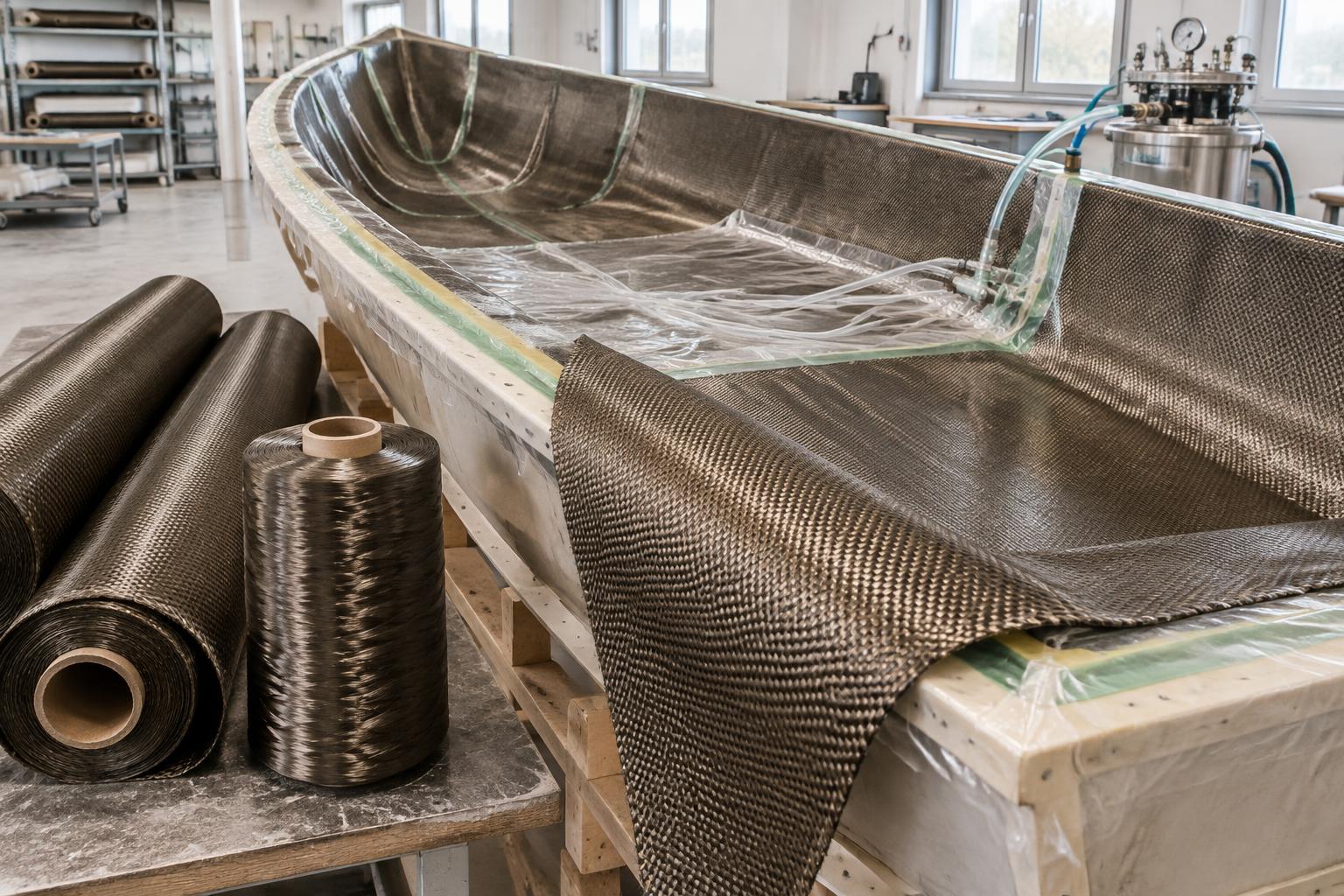
Roving is continuous fiber feedstock, supplied as direct or assembled strands. Tex expresses mass in grams per kilometre. The supplied roving TDS lists 110–4,800 tex and 8–24 µm filaments; ordered grade and sizing still require confirmation.
Twisted yarn supports weaving and braiding. Chopped strands are cut filaments for compatible cement or polymer matrices. Dry, wet and differently sized strands need different specifications. Chopped composite rebar is a separate macro-fiber product.
Fabrics, composites and thermal products
Woven fabric and stitched multiaxial reinforcement can feed laminate manufacturing. The resin, layup, cure and fiber fraction then define the finished composite—not the raw-fiber strength alone.
Needlefelts, ropes and coated textiles are thermal-product categories, but binder, density, coating and exposure determine performance. These wider-market categories require supplier-grade data and sourcing confirmation before specification.
How to read basalt properties
Keep MPa strength, GPa modulus, N breaking load, kN/m grid load and cN/tex tenacity separate. They describe different measures, specimens and material forms. Our technical overview retains methods and page references rather than mixing attractive numbers into one universal specification.
Sources & technical evidence
Product figures are drawn from the supplied technical documents. Original documents are not published; source-page references and unresolved data remain in the technical overview.
Technical overviewArmenian basalt / Quality at the source
Distinctive origins. Measurable quality.
ARMBAS identifies the composition of its Armenian basalt raw material as a foundation for high-quality continuous fiber. The quality case combines the mineral source, fiber-production technology and a specification matched to the application.
Origin alone does not guarantee superior performance. No independent comparison supplied here establishes Armenian basalt as better than every other basalt source. Fiber properties are not finished-composite specifications.